Drift Protocol Update: North Korea Confirmed, Circle's Six-Hour Silence Exposed
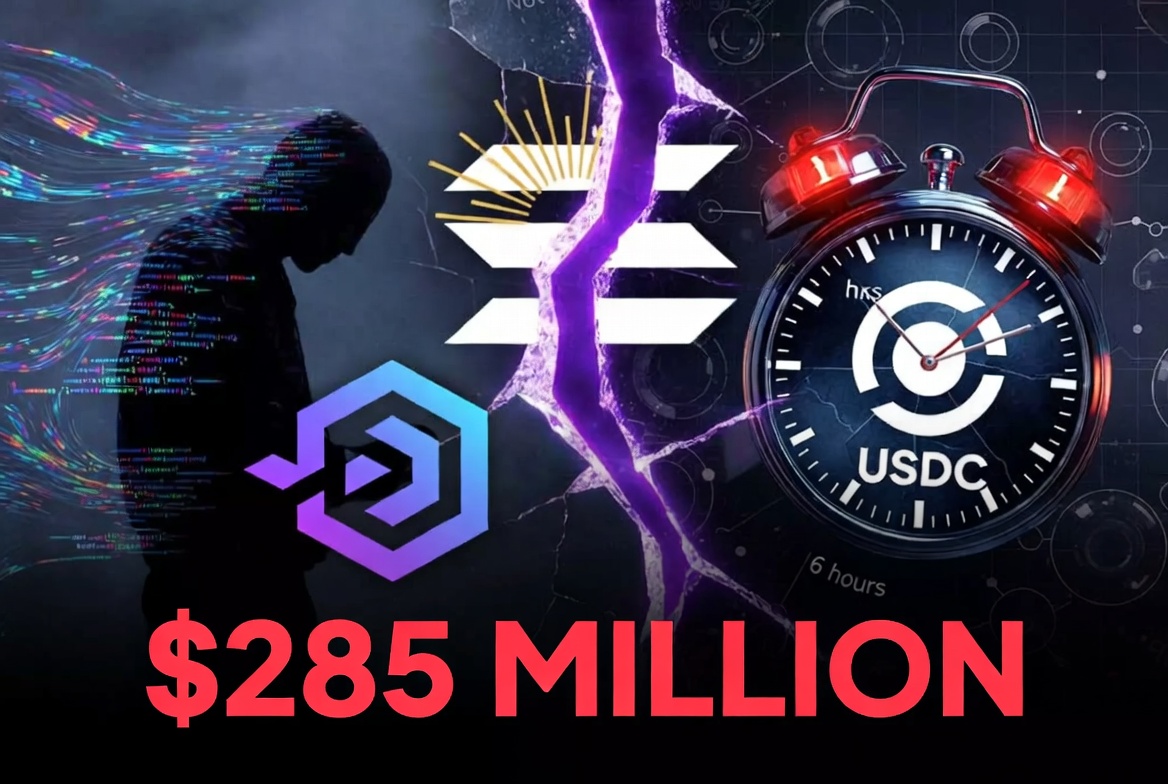
North Korea's Lazarus Group pulled off the largest DeFi hack of 2026. They stole $285 million from Solana's top perpetual futures exchange in 12 minutes. Then they walked the money straight across Circle's USDC bridge during US business hours. Circle did nothing for six hours. Blockchain analytics firm Elliptic confirmed the hallmarks of a North Korean operation. The on-chain behavior matched Lazarus Group tactics used in the $1.5 billion Bybit hack a year earlier. Patient. Sophisticated. Targeting the human layer, not the code. Ledger CTO Charles Guillemet posted on X that the modus operandi was "similar to the Bybit hack last year, widely attributed to DPRK-linked actors." The attack didn't exploit a smart contract bug. It exploited Solana's own architecture. Durable nonces - a legitimate Solana feature that lets you sign a transaction today but execute it weeks later. Think of it like writing a signed check and leaving it in someone's drawer until they decide to cash it. On March 23, the attacker set up durable nonce accounts and tricked two of Drift's five security council members into blind-signing transactions they didn't fully understand. Social engineering. Transaction misrepresentation. Two signatures on a five-person multisig was enough.
The Bitcoin ETF: Wall Street Finally Says Yes
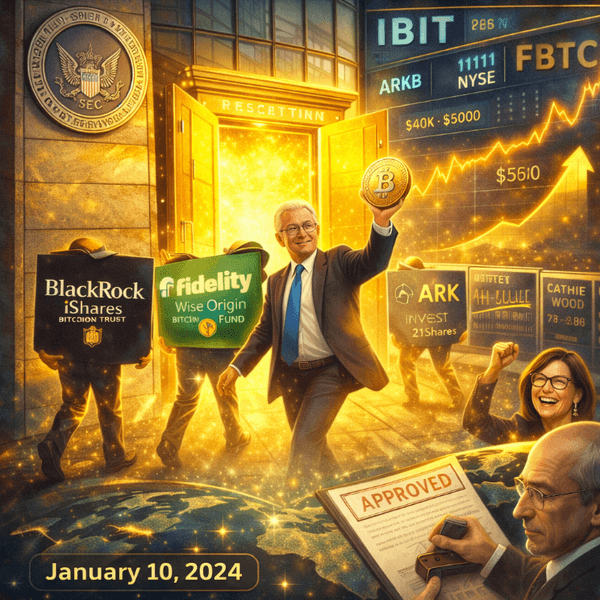
On January 10, 2024, the SEC approved 11 spot Bitcoin ETFs simultaneously. It was the most anticipated regulatory decision in crypto history. The Winklevoss twins had first applied for a Bitcoin ETF in 2013. It took over a decade of rejections, lawsuits, and lobbying to get to yes. The approval was transformative. For the first time, ordinary investors could buy Bitcoin exposure through their existing brokerage accounts, IRAs, and 401(k)s. No wallets, no exchanges, no private keys. Just a ticker symbol. Your grandmother could now have Bitcoin in her retirement account without knowing what a blockchain is. BlackRock's iShares Bitcoin Trust (IBIT) became the fastest-growing ETF in history, reaching $10 billion in assets faster than any ETF before it. By March 2026, IBIT alone holds approximately $76 billion - making it the dominant product in the category. Total US spot Bitcoin ETF assets sit at roughly $91.8 billion. Bitcoin's price responded. From roughly $46,000 at approval, BTC climbed past $100,000 within the year. The ETFs created a structural bid: every day, as new money flows in, the ETF managers must buy actual Bitcoin on the open market. Steady, daily, institutional buying pressure that did not exist before January 2024.