A $150 Box Beat the Mining Giants and Won $200,000
On July 9, 2026, a palm-sized $150 miner running on a wall socket beat 874 exahashes of industrial hardware and mined a full Bitcoin block. Reward: 3.1382 BTC, about $200,000. The odds were roughly one in 18,000 years. Somebody has to win each block. This time it was the ant.
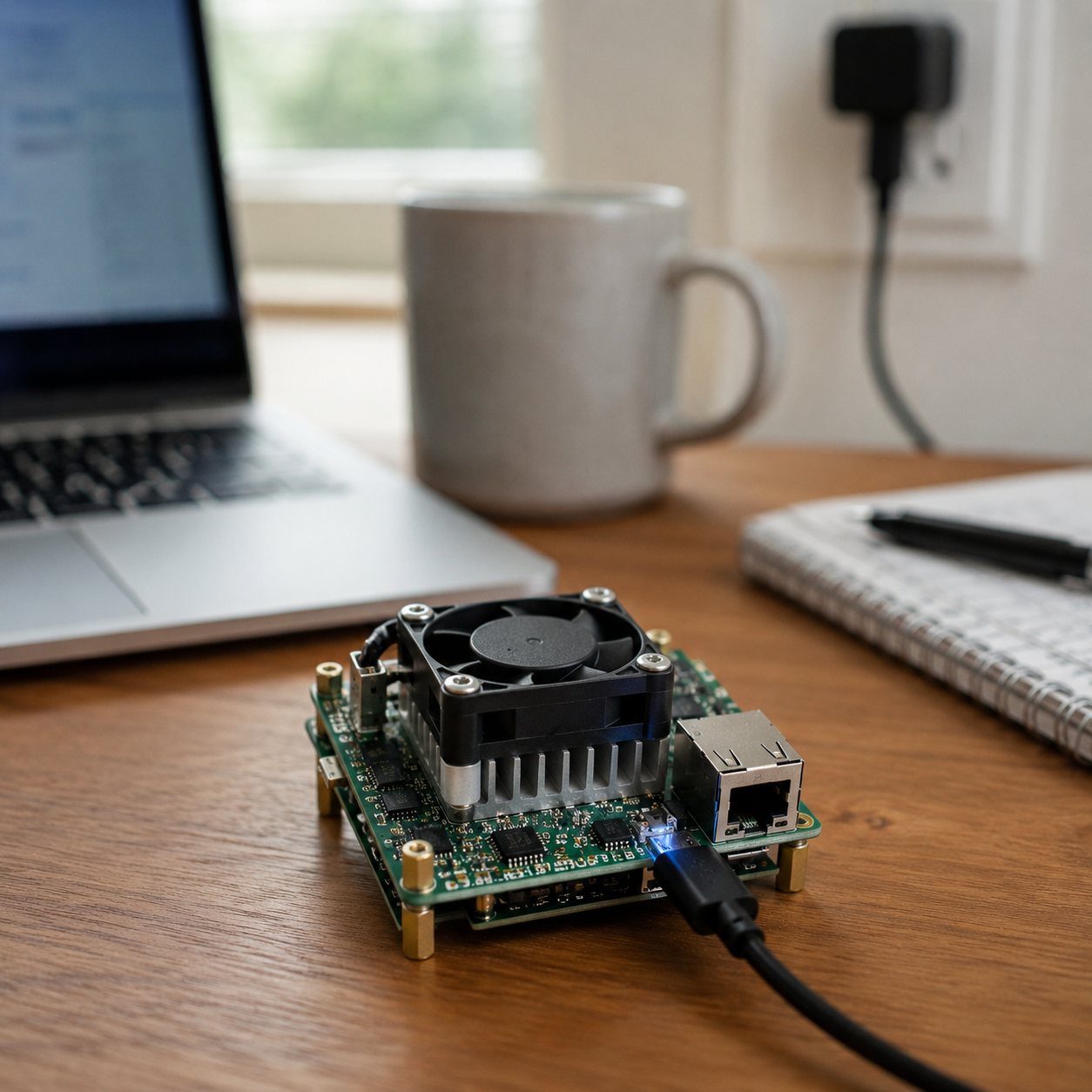
Bitcoin mining is supposed to be a game only giants can play. Warehouses in Texas. Racks of industrial ASICs. Power bills the size of a small town's. The network runs at roughly 874 exahashes per second, an ocean of computing power owned mostly by a handful of massive pools like Foundry USA and AntPool. Most days, the pools win. That is just how the math works.\n\nAnd then, every so often, an ant beats the elephants.\n\nOn July 9, 2026, at around 03:30 UTC, a solo miner running a Bitaxe Gamma solved block 957382 through Public Pool and claimed the entire reward: 3.1382 BTC, worth roughly $200,000 at the time. The 3.125 BTC subsidy plus about 0.0132 BTC in fees. Because the miner was the only worker on the address and Public Pool charges no fee, the whole thing went to one person. No pool split. No cut. All of it.\n\nHere is the part that makes it absurd. A Bitaxe is a palm-sized, open-source miner you can buy for between $60 and $150. It runs on a standard wall outlet, draws 15 to 21 watts, less than a lightbulb, and puts out about 1 terahash per second. On July 9 it was running at 995 gigahashes, just under its rated speed, and had been going for about eight hours. That is a slingshot against an artillery line. The device uses the same BM1370 chip found inside industrial Antminer S21 units, but a single one of those chips against the entire global network is a rounding error. Its share of the network was so small that the odds of it finding a block were estimated at roughly one in 16,000 to 18,000 years.\n\nIt found one in eight hours.\n\nThe reason this is possible at all is the one beautiful, stubborn fact at the core of Bitcoin: every hash has an equal chance to solve the block. The protocol does not care whether the guess comes from a $5 billion data center or a toy plugged in next to someone's router. Each attempt is a lottery ticket with identical odds. The giants buy billions of tickets, so they win almost every time. But "almost" is not "always," and probability does not care about scale. Somebody has to win each block. On July 9, the winning ticket belonged to a box the size of a deck of cards.\n\nThis was not a one-off fluke. Solo miners have been quietly hitting the jackpot all year. Since the start of 2026, they have found 12 blocks. Over the trailing 12 months, the count is 24 solo blocks, up 41% year over year, for a combined 75.44 BTC in payouts and an average of about 15.2 days between wins. In February, one miner rented 450 PH/s for 90 minutes and won. In April, another found a block running just 70 TH/s, the output of a single 2019-era Antminer. On-demand hashrate rentals and cheap open-source hardware have lowered the barrier to buying a lottery ticket, even as network difficulty climbs.\n\nThe backdrop makes it sharper. While hobbyists with $150 boxes keep hitting blocks, the industrial miners are struggling. Margins are squeezed, difficulty sits near record highs, and the big mining companies are pivoting hard into AI data centers to survive. Bitcoin traded around $63,000 the week of the win, below breakeven for many professional operations. The elephants are having a rough year. The ants are having the time of their lives.\n\nNobody should buy a Bitaxe expecting to win $200,000. The honest framing is a scratch-off ticket from a gas station, except the jackpot is real and the machine sits on your desk humming quietly for months. But that is exactly why these wins matter. They are proof that Bitcoin, for all its industrial consolidation, has not fully closed the door on the individual. The network was designed so that anyone with a little hardware and a lot of luck could still, in principle, win the whole pot. On July 9, 2026, someone did.
The Aftermath
The win added to a documented 2026 run of solo-mined blocks: 24 in the trailing 12 months, up 41% year over year, totaling 75.44 BTC. Bitcoin mining difficulty dipped about 5% to 127.17 trillion on July 12 but remained near record highs, keeping solo odds vanishingly small. The event drew wide coverage as a reminder that Bitcoin's proof-of-work lottery still, on rare occasions, pays out to individuals, even as industrial miners squeezed by thin margins accelerated their pivot into AI infrastructure.
COMMENTS