Operation Level Up: 276 Arrests, $701M Seized, Nine Scam Compounds Shut
DOJ and FBI dismantled the pig butchering scam compounds. 276 arrests. $701M seized. Cambodia just passed its first dedicated anti-scam-center law.
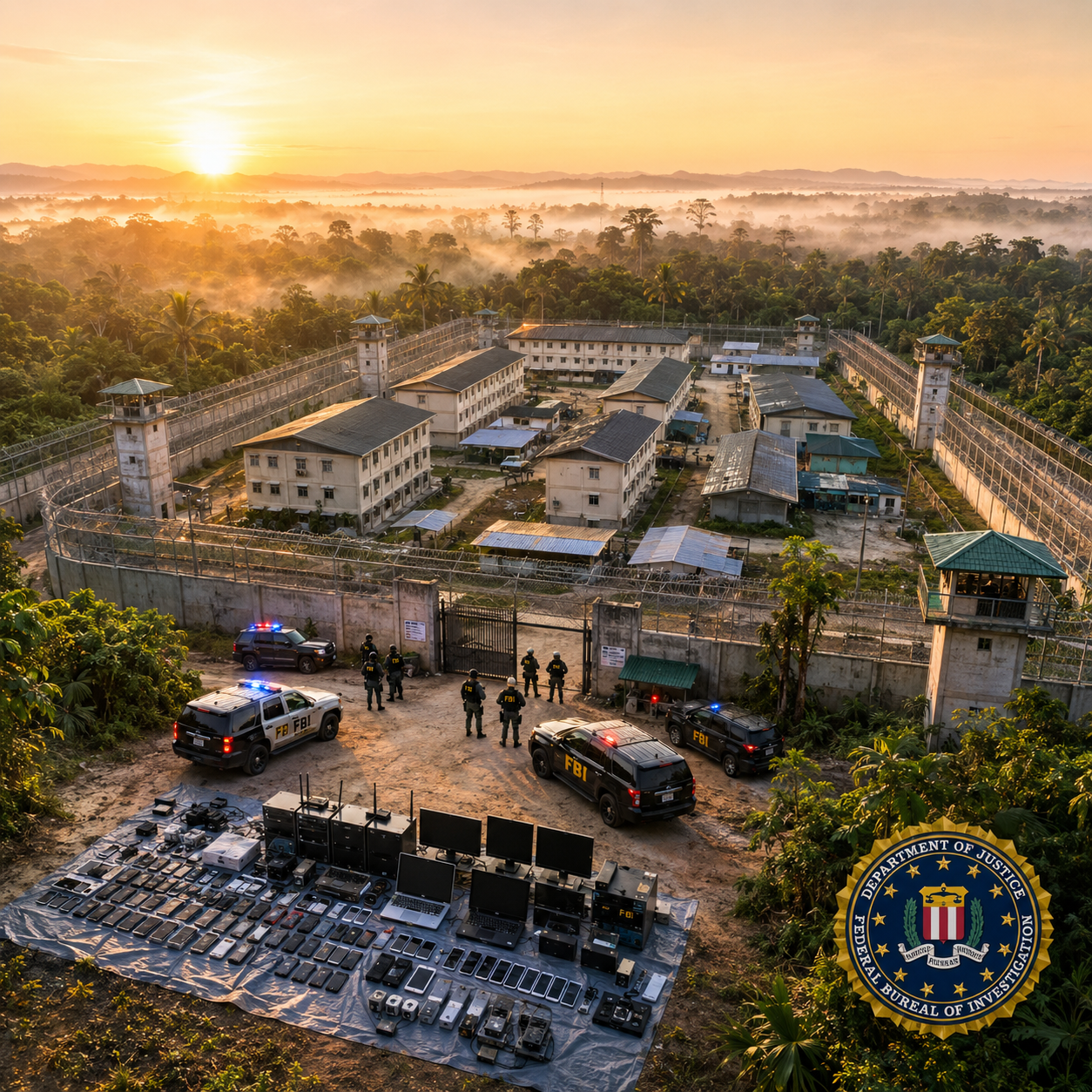
For five years, the pig butchering industry operated out of fortified compounds in Myanmar, Cambodia, and Laos. Trafficked workers - often locked inside - ran romance and investment scams targeting Americans through dating apps, social media, and SMS. Victims sent billions of dollars in cryptocurrency to fake trading platforms believing they were earning returns. The FBI estimated US losses topped $5 billion a year. For most of that period, US law enforcement had no realistic way to reach the operators. That changed in 2026.
In early May 2026, the DOJ and FBI announced the cumulative results of Operation Level Up, an interagency initiative launched in January 2024 to identify and notify cryptocurrency investment fraud victims in real time. As of April 2026, the FBI had notified nearly 9,000 victims of active scams and saved an estimated $562 million from being sent to scam-controlled wallets. By early May, the operation tally had grown to 276 arrests, more than $701 million seized, and the takedown or disruption of nine scam compounds across Southeast Asia.
The operational core of pig butchering is the compound. These are walled, often prison-like facilities staffed by trafficking victims forced to run scams under threat of violence. Each scammer operates dozens of fake personas at once, building "relationships" with US targets over weeks or months before introducing the fake investment platform. The compounds have professional structure: HR departments, training programs, and managers who get bonuses for hitting target revenue numbers. The largest compounds employ thousands of trafficked workers and process tens of millions of dollars per month.
The 2026 indictments were the first time US prosecutors got specific managers and recruiters into a US courtroom. In March 2026, a grand jury in the Southern District of California indicted Thet Min Nyi, a 27-year-old Burmese national known by the alias "Pixy," for wire fraud and money laundering conspiracy. Thet Min Nyi was an alleged manager and recruiter for the Ko Thet Company, an organization running multiple scam compounds in Myanmar. He had been actively recruiting workers and managing operations.
In April 2026, two criminal complaints in the same Southern District charged three Indonesian nationals - Wiliang Awang (23), Andreas Chandra (29), and Lisa Mariam (29) - plus a fugitive co-conspirator with wire fraud conspiracy. The charges connected to two separate scam organizations: Sanduo Group and Giant Company. Awang, Chandra, and Mariam were the operational layer above the trafficked scammers - the people who managed the floor, set quotas, and disciplined workers.
Days later, the DOJ charged two Chinese nationals, Jiang Wen Jie (also known as Jiang Nan) and Huang Xingshan (also known as Ah Zhe and Huang Xing Saan), for their role running the Shunda scam compound in Min Let Pan, Myanmar. According to the indictment, the two were planning to open a second compound in Cambodia after Burmese authorities seized the first compound in November 2025. The crackdown on Myanmar scam infrastructure was forcing operators to relocate. The DOJ wanted to make sure they could not.
The seized $701 million is dispersed across cryptocurrency wallets, US shell company accounts, and international banking holdings. Recovery for individual victims is slow and partial - the funds are tied up in forfeiture proceedings and distributed via crime victim restitution processes that often take years. But the seizures themselves represent operational damage. Every dollar pulled out of the compound supply chain is a dollar that cannot be reinvested in next quarter's scams.
The compounds work like this. A US victim, typically an older adult or a divorced professional, gets contacted on a dating app by an attractive person claiming to be from their general region. The conversation moves to private messaging. Weeks of relationship-building follow. Eventually the "partner" mentions they have been making excellent returns trading cryptocurrency on a platform a friend recommended. They walk the victim through opening an account on a fake exchange that mimics a real one. Initial small deposits show fake gains. The victim deposits more. At some point, when they try to withdraw, they discover they need to pay tax on the gains, then a withdrawal fee, then an "anti-money-laundering deposit." Each new payment is real. The "gains" are not. Eventually the platform vanishes or the "partner" disappears.
The financial brutality is matched by physical brutality on the worker side. Trafficked compound workers are often Chinese, Vietnamese, or Filipino nationals lured by fake job ads promising customer service work in Cambodia or Thailand. Once across the border, their passports are confiscated and they are taken to compounds. They are taught the scam scripts and forced to work twelve-hour days against revenue quotas. Failure or escape attempts result in beatings. The compounds often operate behind active corruption with local officials.
Cambodia's response has finally accelerated. In late April 2026, Cambodia's parliament passed the country's first law specifically targeting scam compounds. Convictions for running such an operation now carry five to ten years in prison and fines up to $250,000. The law also targets people who provide infrastructure - building owners, telecom resellers, payment processors. Whether enforcement matches the law is the open question. Cambodia has a long history of selective prosecution. But the legal structure is finally in place.
Andriod banking trojans uncovered during the investigation revealed even more sophisticated infrastructure. One trojan, discovered to operate from multiple locations including the K99 Triumph City compound, has been used since at least 2023 for real-time surveillance, credential theft, data exfiltration, and financial fraud against victims who installed seemingly legitimate apps. The compounds are not just call centers. They are full-stack cybercrime operations.
For the 9,000 victims notified by Level Up, the news is mixed. They were saved from sending more money. Some who had already sent funds will recover partial amounts through forfeiture distributions. Most will not recover the bulk of their losses. The total US victim population is at least an order of magnitude larger - thousands more US citizens are still actively being scammed by surviving compounds in Myanmar and the Philippines.
Operation Level Up is not a finished operation. It is a posture change. US law enforcement has demonstrated it can identify victims in real time, freeze funds before they leave the US financial system, and indict overseas operators by name. The 276 arrests are the visible part. The deterrent effect is the bigger part. Compound operators previously calculated that geographic distance plus diplomatic friction made them effectively untouchable. That calculation no longer holds.
The Aftermath
276 arrests, $701M seized, 9 compounds disrupted, ~9,000 victims notified, $562M saved as of April 2026. Cambodia passed first dedicated anti-scam-compound law (5-10 yrs prison, $250K fines). Thet Min Nyi, the Indonesian managers, and the Chinese Shunda compound operators face US prosecution. Recovery for individual victims is partial and slow through forfeiture. Surviving compounds in Myanmar and the Philippines continue operating. The operation is ongoing.
COMMENTS